Hamilton, Larkhall and Stonehouse
How many horses in the race?
Labour - 31.6% , SNP - 29.4% , Reform - 26.1%
Hamilton is a fairly sized working-class town within the central belt of Scotland, not too far from Glasgow. Parts of the town lie within the most deprived twenty percent of neighbourhoods in Scotland. Yet this town of fifty-five and a half thousand people has punched well above its weight in recent political times. In 1967, Winnie Ewing and the SNP famously won the town in a parliamentary by-election, the first time an SNP MP was elected since 1945. More recently, a 2023 by-election in Rutherglen and Hamilton West saw a major 24% swing to Labour after the SNP MP, Margaret Ferrier, had been recalled for breaching covid restrictions. This was one of just four successful parliamentary recalls in history.
The 2025 by-election was the first by-election at the parliamentary level (either Westminster or Hoylrood) in Scotland since the General Election, and just the second in the UK after Runcorn and Helsby.
On the 5th of June, Labour won, securing 8,559 votes and 31.6% of the vote. The SNP fell to second, claiming 7,957 votes and 29.4% of the vote, and Reform came third, with 7,088 votes and 26.1% of the vote. These parties totalled for 87.1% of the vote between them, all finishing within just fifteen hundred votes of each other.
Reform had never won an election in Scotland before, and yet just four days before polling day, John Swinney, head of the SNP and First Minister of Scotland declared, the people of Hamilton “can either vote for the SNP … or they will end up with a Reform MSP,” calling this election a “simple choice” between the two. SNP messaging widely reported it to be a two-horse race between in incumbent SNP and the upstart Reform. And yet Labour pipped both to the post. The natural question is, how?
SNP Campaign - Candidate: Katy Louden, South Lanarkshire County Councillor for Cambuslang East
The SNP had held the seat of Hamilton, Larkhall and Stonehouse since its creation in 2011, with the late Christina McKelvie as MSP for the duration. In 2019, the SNP had dominated Scotland in the General Election, winning 48 out of the 59 seats available. Yet five years later they were swept aside, plummeting to just 9, almost entirely being swept form the Central Belt.
The Nats have been largely unpopular outside of their base for some time now, yet Labour’s decisions around the two-child benefit cap and the winter fuel payment have hit disproportionately hard north of the border. Labour, the historic enemy of the SNP in the central belt, were painted has having betrayed the people who voted for them, having gone back on their promises, and now being on a level with the hated Tories. The SNP may have made mistakes, but now Labour were too.
For the SNP, this was largely an election of trying to hold onto what they had. It was Swinney’s chance to prove that he had consolidated the SNP after years of scandals under his predecessors, and his chance to advertise that the party could still win another term in the Scottish Government. Halfway through the campaign, the Nats changed track, and decided instead they needed to go after Reform.
There is little love for Nigel Farage in Scotland. In 2013 protesters had chased him from the Royal Mile in Edinburgh, having to be protected by a police escort as he made his escape. Scotland had voted 62% in favour of remaining in the EU in 2016, the highest percentage of any of the four countries in the UK. UKIP, nor Brexit, nor Reform, had never won a parliamentary or Holyrood seat north of the wall. For many, there is a persistent belief that Farage can’t win there, because the Scottish people are ‘better’ than that. So, in order to squeeze voters away from Labour, the real opponent, the SNP painted the election as a direct competition between them and Reform. Swinney made those comments to scare Labour’s base into voting SNP. Ironically, he legitimised the very thing he thought impossible.
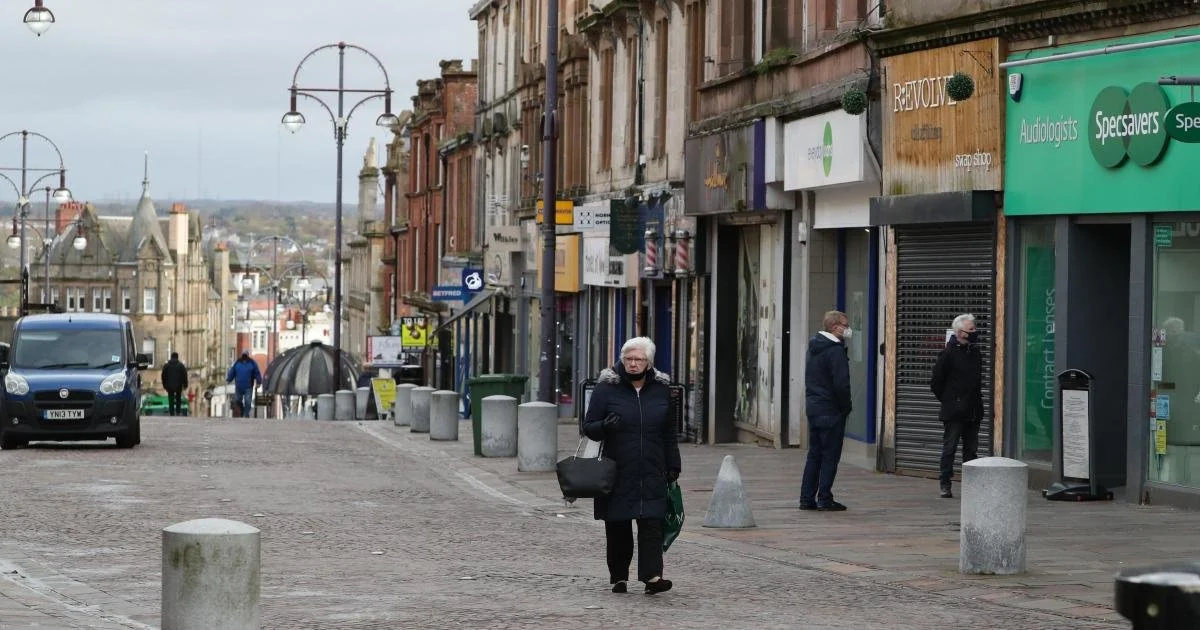
Hamilton town centre
Reform Campaign - Candidate: Ross Lambie, South Lanarkshire County Councillor for Clydesdale South
On the 22nd May, around the halfway mark of the campaign, Reform were found to have pushed a particular Facebook advert. This advert claimed Scottish Labour leader, Anas Sarwar, would “prioritise the Pakistani community” in Scotland. The implication that Sarwar, himself of Pakistani descent, was not truly Scottish, could not be loyal to Scotland, and therefore the people of Hamilton should not vote for his party.
The advert was so bad in nature, that Swinney, called it “blatantly racist” and both Labour and the SNP lodged official complaints over it. When Sarwar himself complained, Farage claimed Sarwar had introduced “sectarianism” into Scottish politics. This was an attempt to gather votes as part of Reform’s long term anti-DEI/woke culture war strategy.
But this did not deter Reform. Both Richard Tice and Farage made several trips to Hamilton during the campaign, with it being Farage’s first foray into the country since that ill-fated trip to Edinburgh twelve years before. This facetime and use of big-name campaigners definitely boosted their vote.
Hamilton, like many areas outside of the major cities in Scotland, suffers from acute deprivation of all sorts. For many, the Tories had filed in Westminster, the SNP have let them down in Holyrood. Now too, Labour’s attempts at rule have been misguided. Thousands of people were searching for an alternative, and in stepped Reform.
It's easy to criticise when you don’t govern. It’s the same phenomenon Trump found in the 2016 Presidential Race. Yet in areas like Hamilton, which have felt let down by three different parties of differing ideologies, who do they have to turn to if not Reform. The story of Hamilton, that of three distinct parties battling it out brutally in the Central Belt and finishing within a hair of each other, will surly play out next year in the Holyrood elections. Whilst this time, Farage once more failed to win in Scotland, with the current winds in his sails, someday, somewhere, his party will win.
The SNP and Labour have been put on notice.
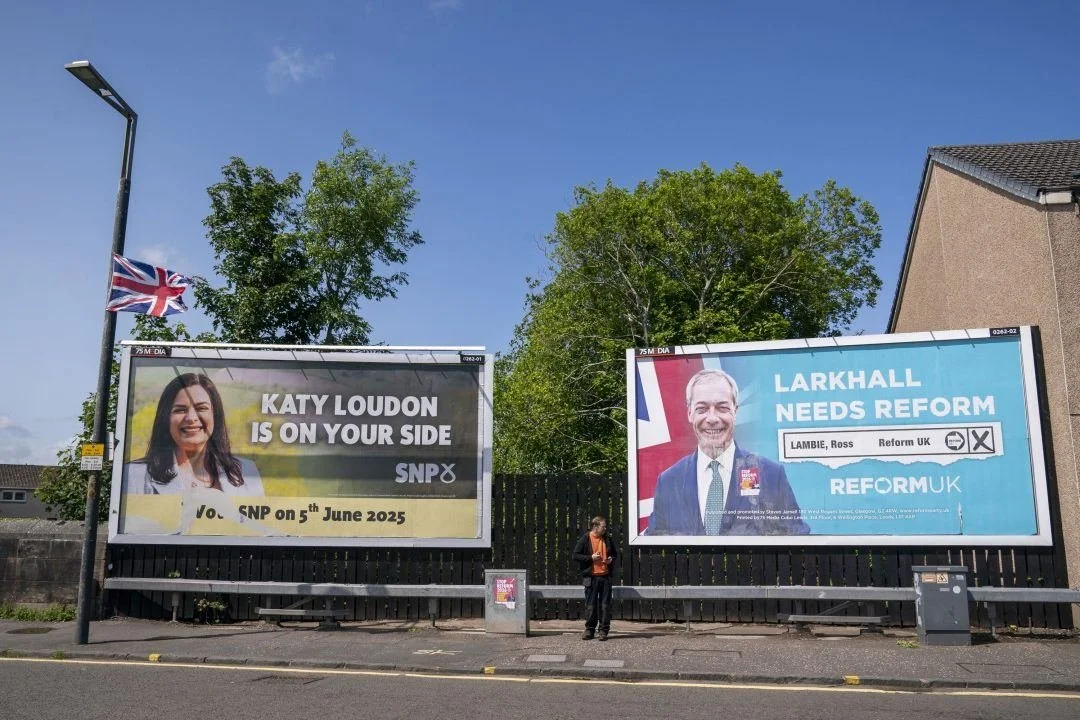
SNP and Reform signs in Larkhall
Labour Campaign - Candidate: Davy Russell, former Deputy Lord Lieutenant
The centre-left SNP, the tree of Nicola Sturgeon and Hamza Youseff, was largely seen as appealing very much to the cities, especially Glasgow, Edinburgh and Dundee. Reform has largely been seen as an import from the south, from England. So, Labour’s main strategy was to promote themselves as the local party, concerned with local issues. Not national, hihg-vaulted ideas like independence, or immigration, but on day-to-day issues. They picked a local man, Davy Russell, who had been born in a mining town within the vicinity and educated at Hamilton Grammer School.
On the 21st of May, it was reported that Russell had avoided a televised debate with the other two candidates. This debate, undoubtedly, would have been used to attack Starmer’s record in Westminster in order to undermine Labour. But Labour refused to take part. They were determined to make this election about Hamilton, and about South Lanarkshire.
Part of this effort came in enlisting Rangers legend and local inhabitant Grame Souness. Souness, the one time player-manager who led Rangers to three league titles, claimed Davy Russell “is different. He’s one of your own, a local man who knows what it’s like to graft, to face challenges head-on, and to stand up for his community”. His quote clearly referenced Russell’s local credentials.
During the Reform advert controversy, Sarwar himself hit out at Farage, calling him “a pathetic, poisonous little man, who wants to try to bring his divisive politics into Scotland. This is a guy that doesn’t understand Scotland and doesn’t care about Scotland. He couldn’t give a damn about Scotland.” Again, Labour were showing they were the party for Scots, they were the party for Hamilton. That Reform simply couldn’t be, not least because its leaders don’t understand Scotland. Throughout the campaign, they had stuck to that local message, and it worked.
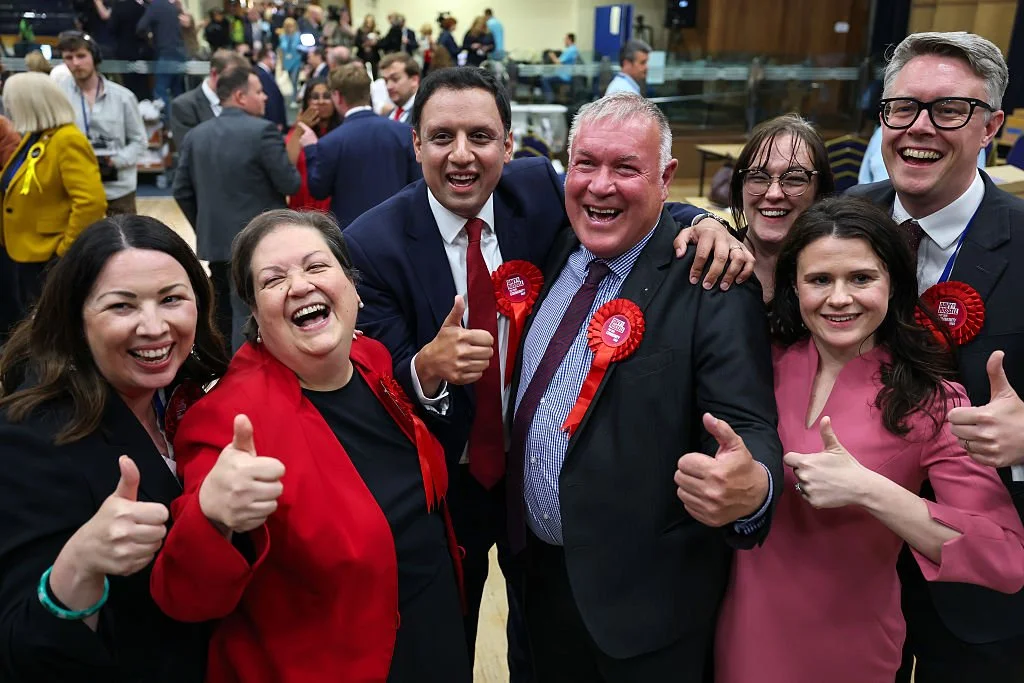
Scottish Labour leader Anas Sarwar (third from left) and new MSP Davy Russell (centre)
Outlook
A year ago Labour won 37 of the 57 seats in Scotland at the General Election in 2024. This was up from just the 1 they had won in 2019. This has largely been seen as a rejection of the SNP’s 18 years of rule in Scotland. Since 2007, they have been the dominant force in Scottish politics. But in that time devolved areas of public policy have suffered. Education, health care and infrastructure are all noticeably worse then in England. For the electorate, who else is there is blame but the SNP?
Labour swept the central belt a year ago, winning 35% of the vote to the SNP’s 30%. However, Hamilton, Larkhall and Stonehouse show us that both parties have lost ground to Reform.
After the count, Sarwar claimed “What the people of Hamilton, Larkhall and Stonehouse have done last night, is they have led the way to the election of a Scottish Labour government next year and the removal of the SNP from office.” This is not the case. Whilst the SNP still remains unpopular outside their base, this does not mean Labour is now the government-in-waiting. Scottish Labour has suffered due to the decisions of Starmer’s regime in London. The SNP base is still large, and Reform is finding gaps between the two feuding giants of Scottish politics. Moreover, both the Lib Dems and the Tories have entrenched themselves in their respective bases.
This campaign was brutally fought between the three parties. All three parties are attempting to appeal to similar voters and similar communities. The distance between the three parties in the polls shows each race will be extremely competitive in the foreseeable future. The three-way battle between Labour, the SNP and Reform looks set to continue.
There was, however, one ray of hope in the whole campaign. On the 23rd May, two weeks before polling day in Hamilton, SNP MP Pete Wishart spoke in the House of Commons, saying “a disgusting, racist advert has been released by Reform … where a speech by Scottish Labour leader Anas Sarwar has been selectively edited to question the identity and loyalty of the Scottish Labour leader. Now, we may profoundly disagree with Anas Sarwar on a range of issues, but he is a proud Scot who always attempts to put the interests of his country first. In Scotland, we are united against this sort of gutter politics.” Wishart, like Swinney, rose above the election campaign to call out Reform. Now, on Swinney’s part you could argue he did that to try squeeze Labour of votes, but for Wishart, few if any voters in Hamilton would have seen that particular speech in the House of Commons. He did that to put on record the hatred that is swirling around in contemporary politics. Hopefully more people like him continue to call out the rotten campaign tactics some are quick to employ.
