Runcorn and Helsby
You won’t threaten your MP again, will you?
Reform- 38.72% , Labour - 38.70%
Picture the scene. You’ve had a long day. It’s the end of a long week. Work’s been tough, relentlessly burying you under long hours and a heavy workload. Expectations have so far not been met by you or your team. And you are feeling the strain. Then, as you’re heading home, you get that magical text. Bing. Your mates are inviting you to the pub. Finally, something to be excited for, somewhere to let off steam. By the time you get home, they’re already meeting, so you skip dinner. You’ll get something there.
You head off. You have a drink, but the night is still young, so you have another. After a while this pub feels dull, so you go to the next one. And then the one after that. The hours quickly roll on, and after a while you can’t remember the exact number of drinks you had. Maybe it was “six”, no, it could have been “seven”. Before long, it’s getting close to closing time. You find yourself stood outside in the street, waiting to figure out your next steps.
Then, a random begins chatting your ear off about something or other. A bridge maybe? But, who knows. Something in your brain switches. Maybe its this talk about something work adjacent that’s flicked a switch. Or maybe you remember the fate of Joe Cox and David Amess, former colleagues killed in their offices. Either way, you feel threatened. And so, you panic. What should you do? How should you react? You can’t just walk off, so you feel trapped. It could affect your career if you do, as it has affected so many before. But why should you listen to this random drone on about this bridge?
For Mike Amesbury, on the morning of the 26th October, he decided the best option was to punch his way out.
Months later, Judge Tan Ikram described what happened next as the following:
“you were out drunk in the early hours, the attack was unprovoked, being in drink was no excuse. … You continued the attack whilst the victim was on the ground, the incident may not have come to an end if bystanders didn’t intervene. … Your reference to being a member of parliament in the aftermath brings negative impact to the office you are privileged to hold. Your profile and position of power as a servant of the people ought to be a role model to others. That is something you have to be mindful of in all that you do.”
Amsbury was sentenced to a lenient 10 weeks in prison for common assault. On appeal, it was suspended for two years. He was ordered to attend anger management sessions, 200 hours of unpaid work, and submit to alcohol monitoring for twelve months. Eleven days later, he would resign his seat in Parliament. He jumped before he could be pushed.
And so, just like that, Keir Starmer’s first major electoral challenge was on.
Runcorn became folded into the wider local elections. Across England, hundreds of seats were set to poll on May 1st. Among them, 1,641 council seats in 24 local authorities and six mayoral seats. There should have been more, but a further six counties and the Isle of Wight had had their all-up elections cancelled in the name of local government reorganisation. This move had largely been criticised by opposition groups as “anti-democratic”, but what did a lack of democracy in Surrey, or Suffolk, matter to the people of Cheshire?
Reform Campaign – Candidate: Sarah Pochin – Former Cheshire East Councillor for Banbury and former Cheshire East Mayor as a Conservative
By-elections are a weird thing. One the one hand, they are seen as referendums on the national government. It is a chance for the people of a given seat to have their say on the government’s policies. On the other hand, each seat is still subject to the unique local conditions that affect it. The SNP won’t run in a by-election in Cornwall, and a wealthy suburban seat won’t flip to the SDP overnight.
For Reform, they were running a localised election in the north-west corner of Cheshire, interspliced with national issues as part of the larger local election campaign. The main national issues Reform zeroed in on, across their entire local campaign, was stopping the boats, the rising cost of living and the loss of the winter fuel allowance. In 2024, many across the country had believed Labour would address the first two when they came into office and yet eight months on, they’d failed to do so. For millions, a single belief had begun to crystalise. After fourteen years of Tory rule in which the nation slid from crisis to crisis, were Labour as bad as the Tories? And if so, is there someone else to vote for?
Immigration has, as an issue, been front and centre in the news in the first year of the Starmer administration. It seems like each day, newspapers and TV news show the numbers of people crossing the channel. On 29th July in Southport, a Merseyside town not far from Runcorn, a British citizen and second-generation Rwandan immigrant, killed three little girls aged between six and nine, and injured ten more in a mass stabbing at a children’s dance class. The government’s handling of this incident was poorly received, and misinformation, combined with the limited public information on the incident, spread rapidly. The image of a black man, who’s mugshot had been released, stabbing and killing white schoolgirls enraged people across the UK, and anti-immigration riots and protests erupted from Dundee to Belfast and from Tenby to Plymouth. The police cracked down hard. 1,280 people were arrested and 800 charged in connection to the disorder, with one boy as young as 12 being arrested and charged. Further speculation arose that the police had been especially harsh on the protesters but had been more lenient to the original assailant in Southport. This prompted the public to label Starmer, “two-tier Kier”.
In late December 2024 to early January 2025, the Rotherham Grooming Gang scandal seemed to bring politics to a standstill. Reform MPs were front and centre at this time, attempting to turn any parliamentary debate into a chance to argue for a national inquiry. Their argument, that men of Pakistani descent had systematically abused white girls in the north of England and that the government was too scared to call them out for fear of being labelled racist, landed with many across the country. On X, Elon Musk jumped into the fray, accusing Starmer of being “deeply complicit in the mass rapes in exchange for votes.” He wasn’t alone in this thought.
After the election Pochin would claim, “immigration is massive here.” That “Runcorn feels like a dumping ground for illegal immigrants.” Reform had tapped into this feeling the entire campaign. At one point they released a leaflet, stating that 750 illegal immigrants were being housed in Runcorn. For a deprived area that has a white population of over 96%, there is no doubt this focus had a major impact.
In April 2025, there was deep suspicion about the new Labour party, it’s motives and it’s abilities to govern. Reform tapped into those feelings across the north and the midlands. The party argued that neither one of the two major parties was right to govern, that people needed to take a new direction, or else they would continue to see the same results. High inflation, an uncaring far-away government, increasing fuel and food poverty and continued mass immigration.
Reform tapped into a feeling that Labour were treating foreign asylum seekers better then born and bred British citizens. Across the country that message hit home, and across the country Reform swept into power in counties as varied and far-apart as Kent, Derbyshire and Durham. The message landed.
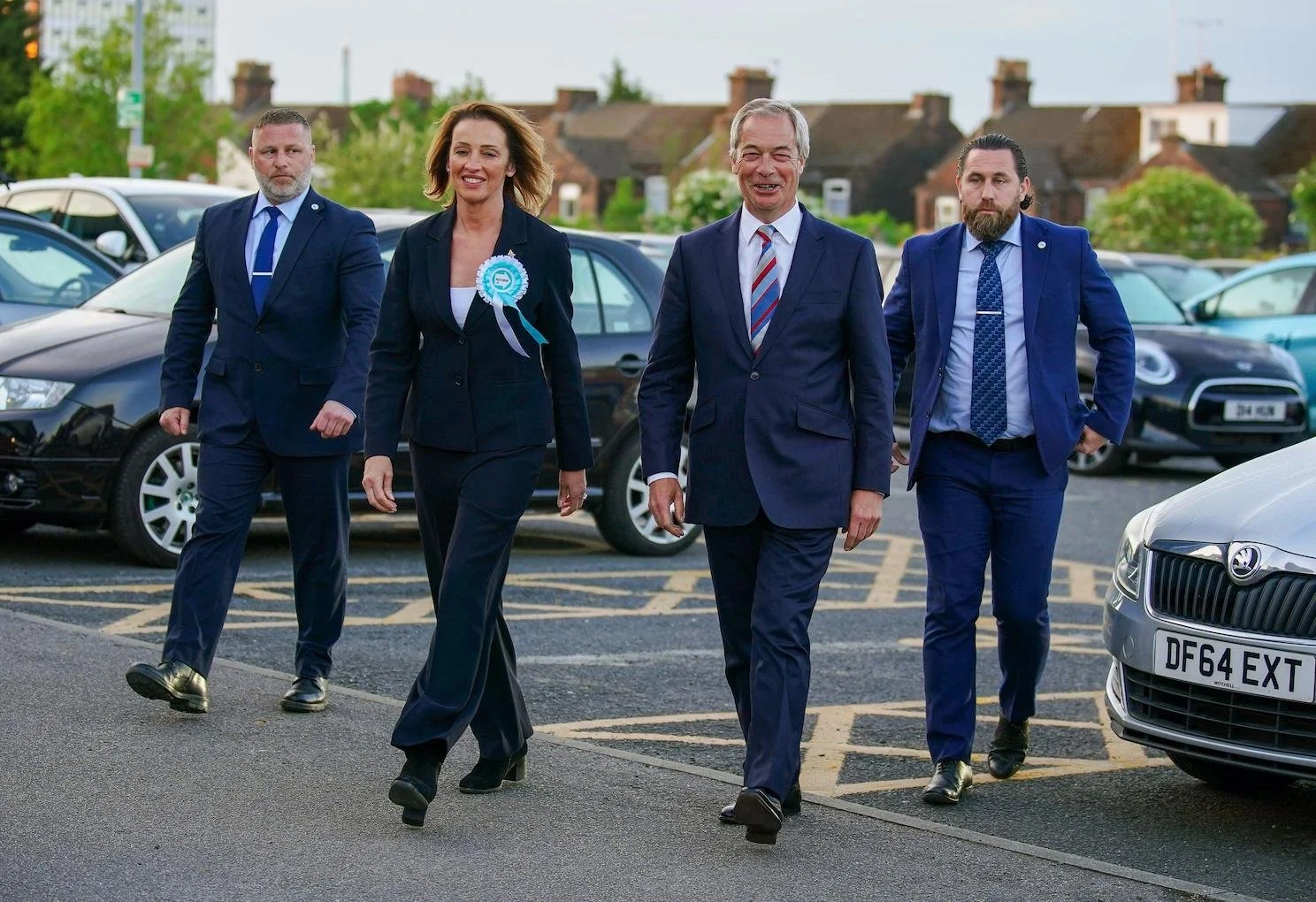
Reform candidate Sarah Pochin alongside Nigel Farage
Labour Campaign – Candidate: Karen Shore – Councillor and Deputy Leader of Chester Council
Labour was insulated in Runcorn, having held the constituency at Parliamentary level since 1983, some 42 years. This includes surviving two of Thatcher’s elections, and surviving Johnson’s blue wave. Insulation however, leads to the worst crime in electoral politics. Complacency. The obvious example is the Hilary Clinton campaign of 2016, and then again with the Biden/Harris campaign again in 2024. It kills campaigns, and it reared its head in Runcorn.
One mentor of mine told me, ‘When in doubt go and knock a door’. Knocking doors is good for a couple of reasons; for one, you can find out exactly how local people are feeling. A quick conversation, even if negative, can be useful. If someone slams the door in your face, you know you might be in for a long campaign. A second reason that cannot be overstated is the power of the local vote. The number of people who vote for candidates because they’ve seen them down the shops, or because they’re from that town, or they recognise them, is astounding. In many cases both the Conservatives and Labour have parachuted candidates into various races, and these campaigns have often been heavily criticised.
Now Labour, having sown up this former industrial town in the historically solidly Labour north-west decades ago, were perceived to have taken the seat for granted in previous elections. Numerous people who were either interviewed by the press or who posted online, have said they hadn’t seen a Labour politician or activist in years. This has an impact. It makes people feel taken for granted and erodes any belief that that party is genuinely listening or caring about their concerns. And so, they take their votes elsewhere. Labour had won a majority of 14,696 votes the year before. There must have certainly been some level of complacency within camp that they would do so again.
The Shore campaign made a second major mistake. Just two weeks into the campaign Shore opened a petition to close down the local asylum hotel. Writing on Facebook she said, “the last government left behind a broken asylum system, with millions being spent on hotels, whilst evil people smuggling gangs rake in huge profits. That is simply not fair. Labour is fixing the mess and has already removed over 19,000 people who shouldn’t be here. I’ll campaign to close the local asylum hotel.”
In that way, she justified every concern Reform had been campaigning on. She had justified the belief that immigration in Runcorn was an issue, and she had brought it to the centre of her campaign. Now the campaign was about immigration. Both parties were talking about the problem, but Labour was in power and seemingly had done nothing about it. To the public this simply looks inept. There is no point discussing a problem in an election, if you’re own people have failed to even communicate their attempts to fix it, let alone attempt to fix it.
Clearly, the Shore campaign was trying to take the wind out of the sails of Reform. But. Labour had been in power for the better part of eight months and had yet to “close the local asylum hotel.” In fact, in many areas of the country the number of asylum seekers was increasing. People were still landing in the UK on boats, and they were still being housed. So, the petition came across as disingenuous. Why should you vote for someone who’s very party has done the exact opposite for the last eight months?
Labour attempted to engage Reform at their level, in a place where the government was seen as distant and uncaring to the needs of everyday people. Runcorn has systemic and serious issues, and yet here was Labour drawing a line to immigration. Just as Reform did.
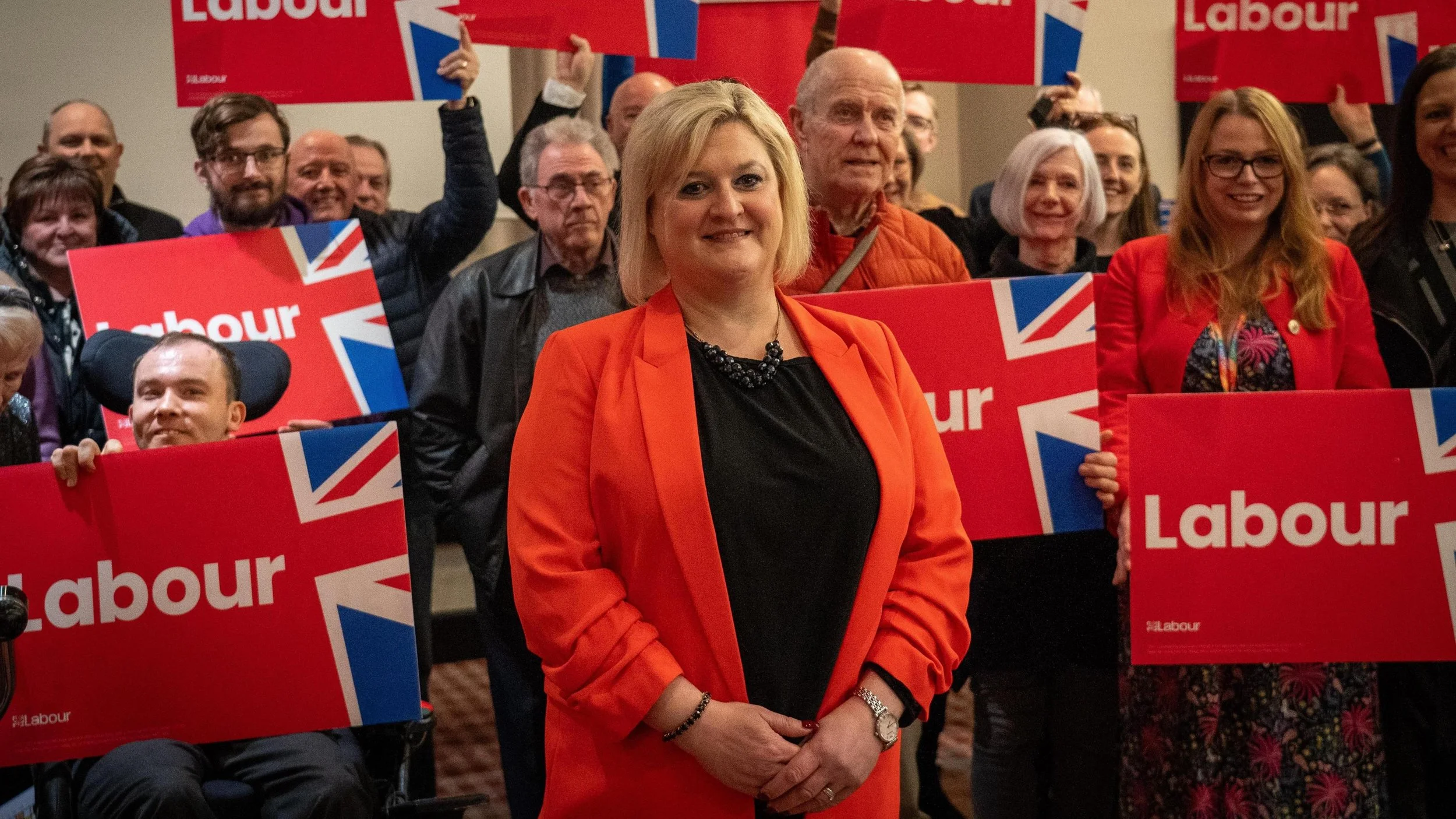
Labour Candidate Karen Shore
Outlook
Runcorn and Helsby will be known for two things. For one, it was the first by-election won by the Reform party. They did something in Reform that UKIP never managed, they won a seat in a by-election with a brand-new candidate. UKIP may have won two by-elections in 2014, in Clacton and in Rochester, but both had been won by defectors. Here, Reform was traversing new ground. Runcorn had been won of Labour’s safest seats with Amesbury’s majority being smaller then only forty-six other Labour MPs, and only fifty-nine Labour MPs had won more votes in ’24. Within a year that majority had been completely wiped out, and Labour had lost a seat in the first by-election of the new parliament. It was a damning indictment of both the government, the local Labour party and Amesbury’s actions.
Alternatively, Runcorn, along with the sweep of the locals Reform had managed, leaves several questions unanswered:
How far can Reform go? If they can win in such traditional Labour heartland, how many other seats are primed to switch in either a by-election or in a General Election in the future?
Can Reform win seats in a General Election? They won five seats in 2024. A great deal was made about their ability to campaign, and the growth of their organisational structure between ’24 and ’25. If fully deployed, would they have a similar success as in the locals?
Is Reform still a protest vote, a vote against Tory and Labour, or is it now a vote fully for Reform?
Only time can answer these questions.
The second thing Runcorn will be known for is just how close the election was. Just SIX VOTES separated Labour and Reform. It was the closet by-election result since the 1893 Cirencester by-election. It can often feel like your vote does not matter. For decades, hundreds of constituencies have felt safe, or have been marginals between only two parties. Yet this new Parliament is already showcasing that we are in a new era of politics. A 14,000 vote majority, and a forty-year entrenchment were whittled away overnight. More seats then ever are open to be competitive, not just for Reform but across the political spectrum. Truly, now more than ever, each vote matters.
So, how far can Reform go? Runcorn and Helsby proves that they still have some way to grow yet, and that the other parties need to take them seriously.
